Future Industries
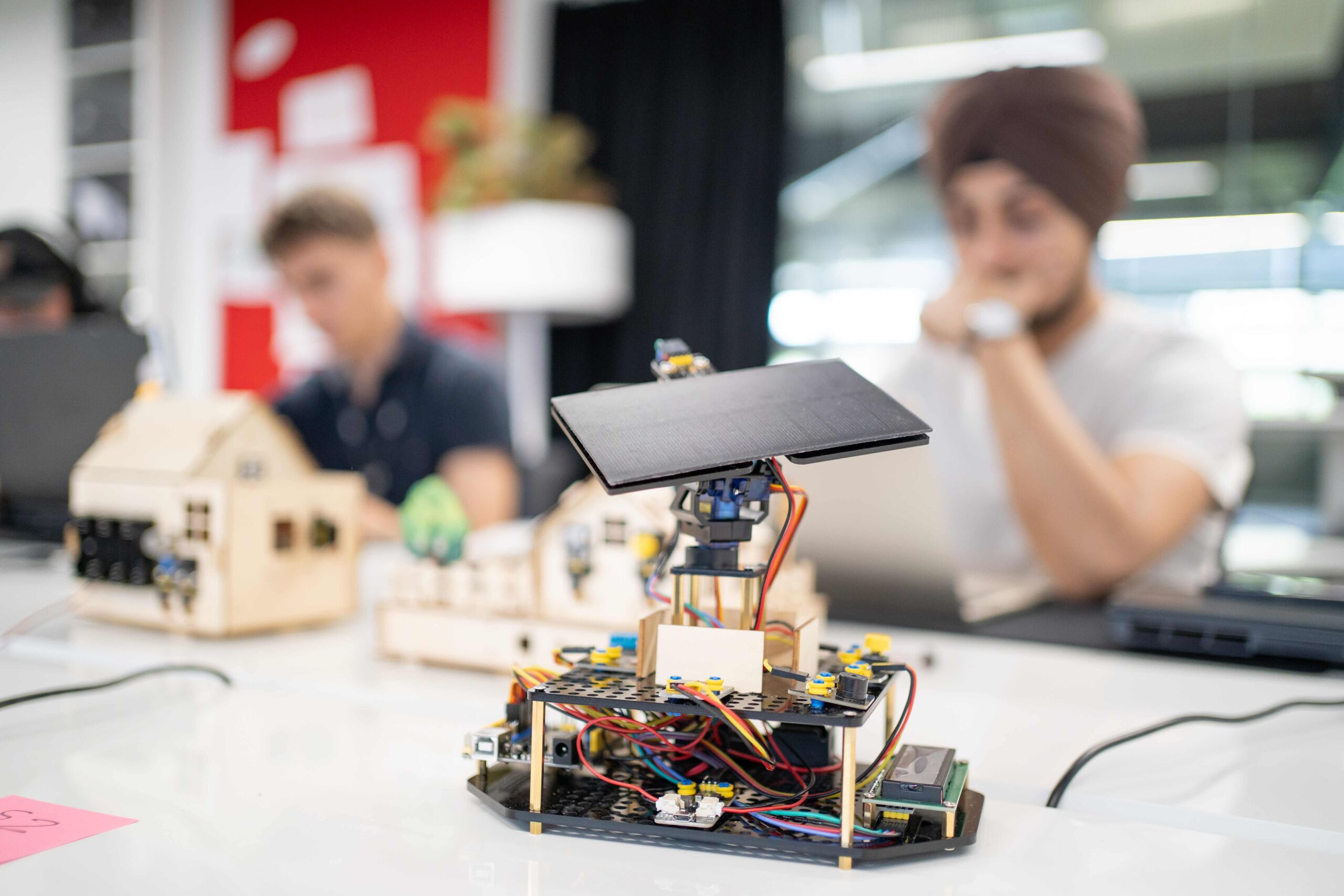
Students will learn how to apply cutting-edge computing to a wide range of future industry contexts. In collaboration with our company network, students will engage in real-world problem solving and gain practical and methodological competencies within the realm of industrial production and innovation. Focus is put on competences relevant for sustainable computational manufacturing, such as robotics (ROS), IoT (sensors, actuators, edge devices), predictive maintenance, supply chain management, digital twins, and business processes.
LearnLabs and technologies
Students gain experience across several labs during the program, but for Future Industries, the strongest links are to labs and technologies that support industrial production, intelligent systems, and connected environments.
Together, these labs and technologies help you understand how computing can be applied to make industrial systems smarter, more connected, and more sustainable.
Key technologies and methods include:
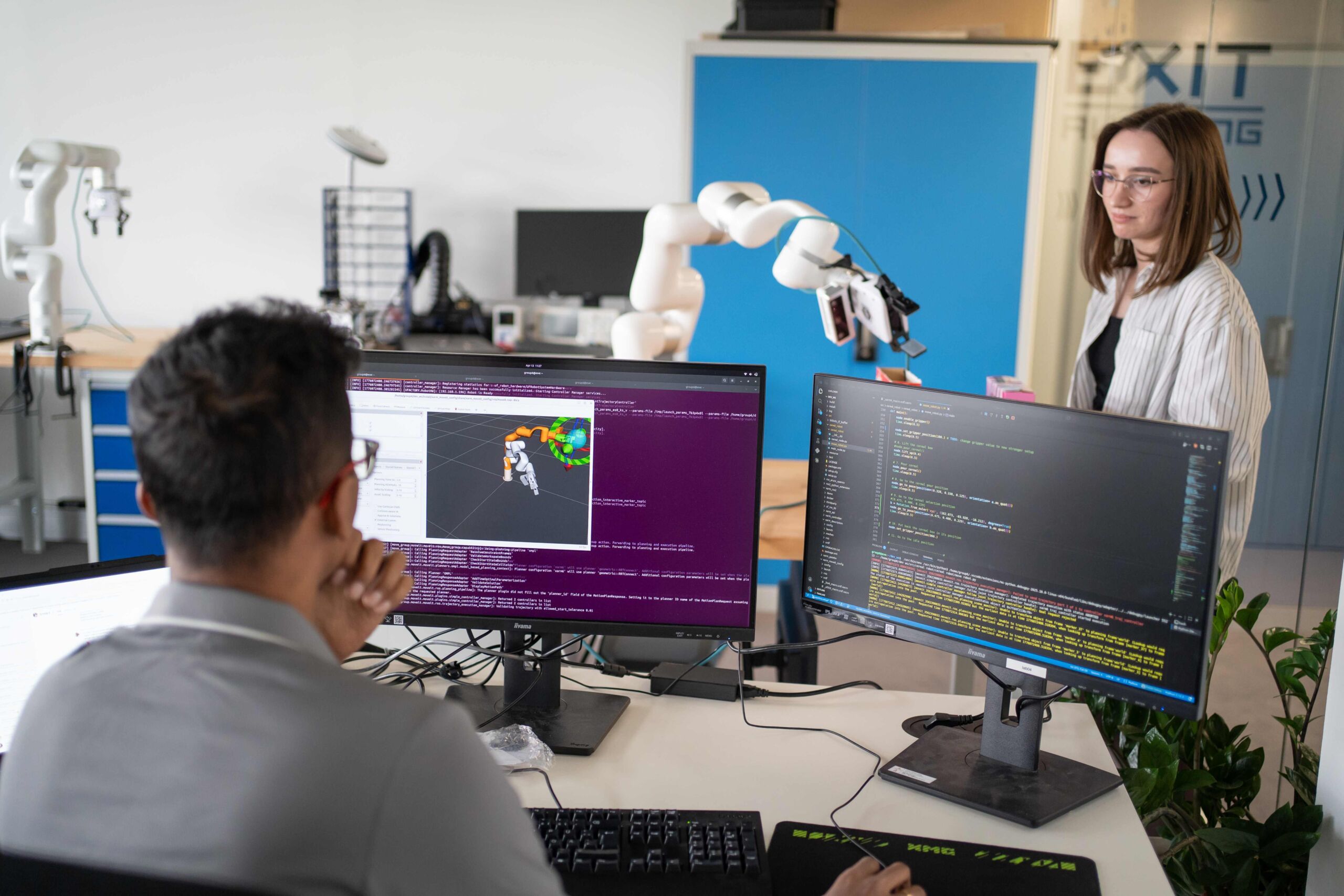
- Robotics, especially ROS
- Machine learning (reinforcement learning, supervised learning, foundation models)
- IoT, including sensors, actuators, edge devices, and communication (MQTT)
- Predictive maintenance
- Supply chain management
- Digital twins
- Business processes
Core LearnLabs include:
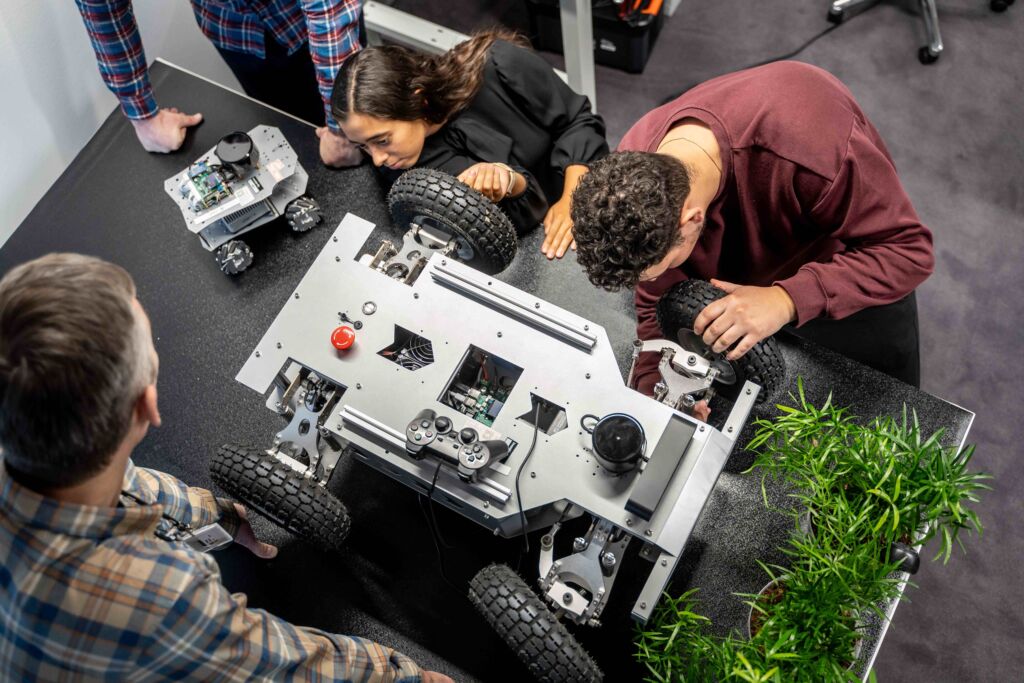
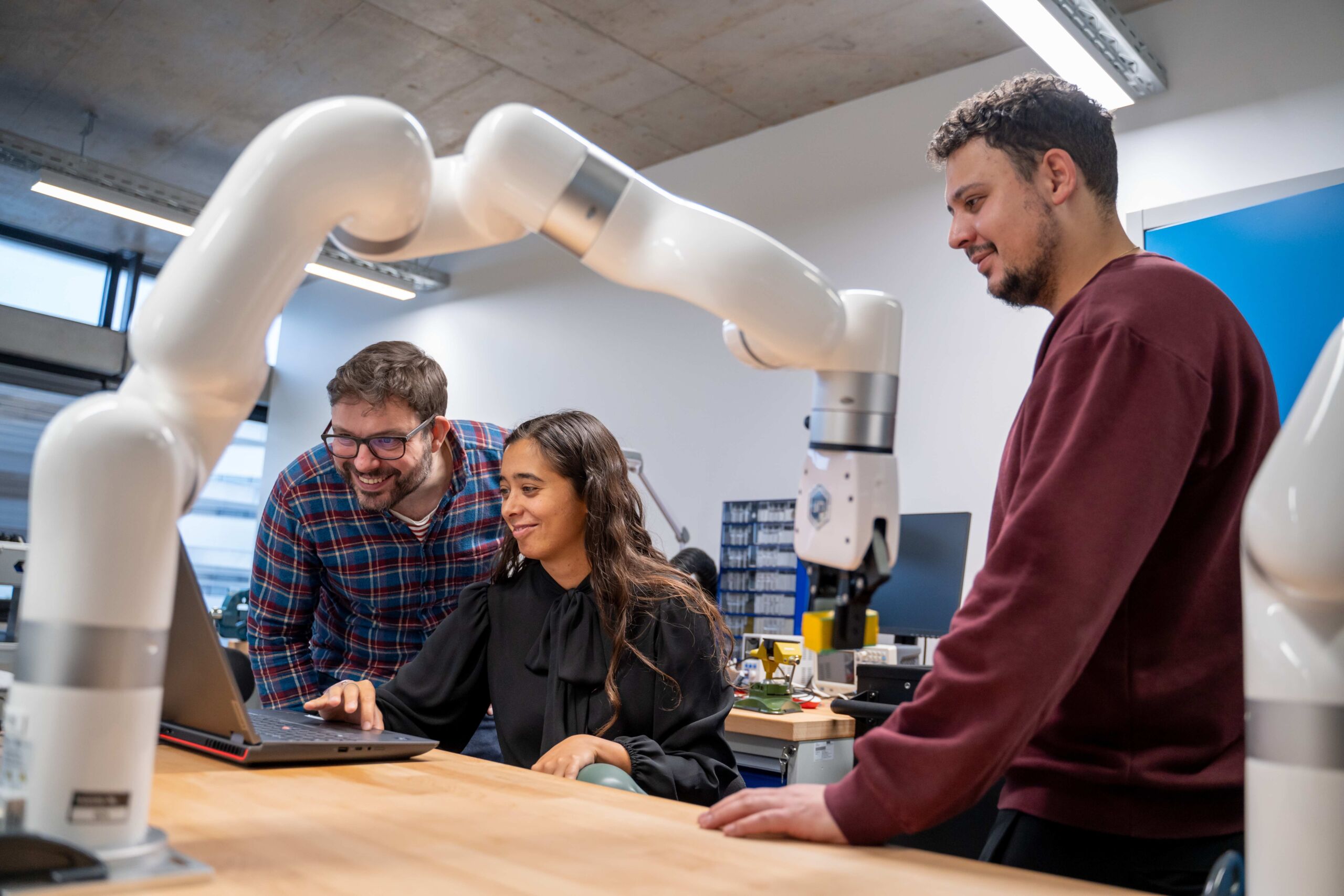
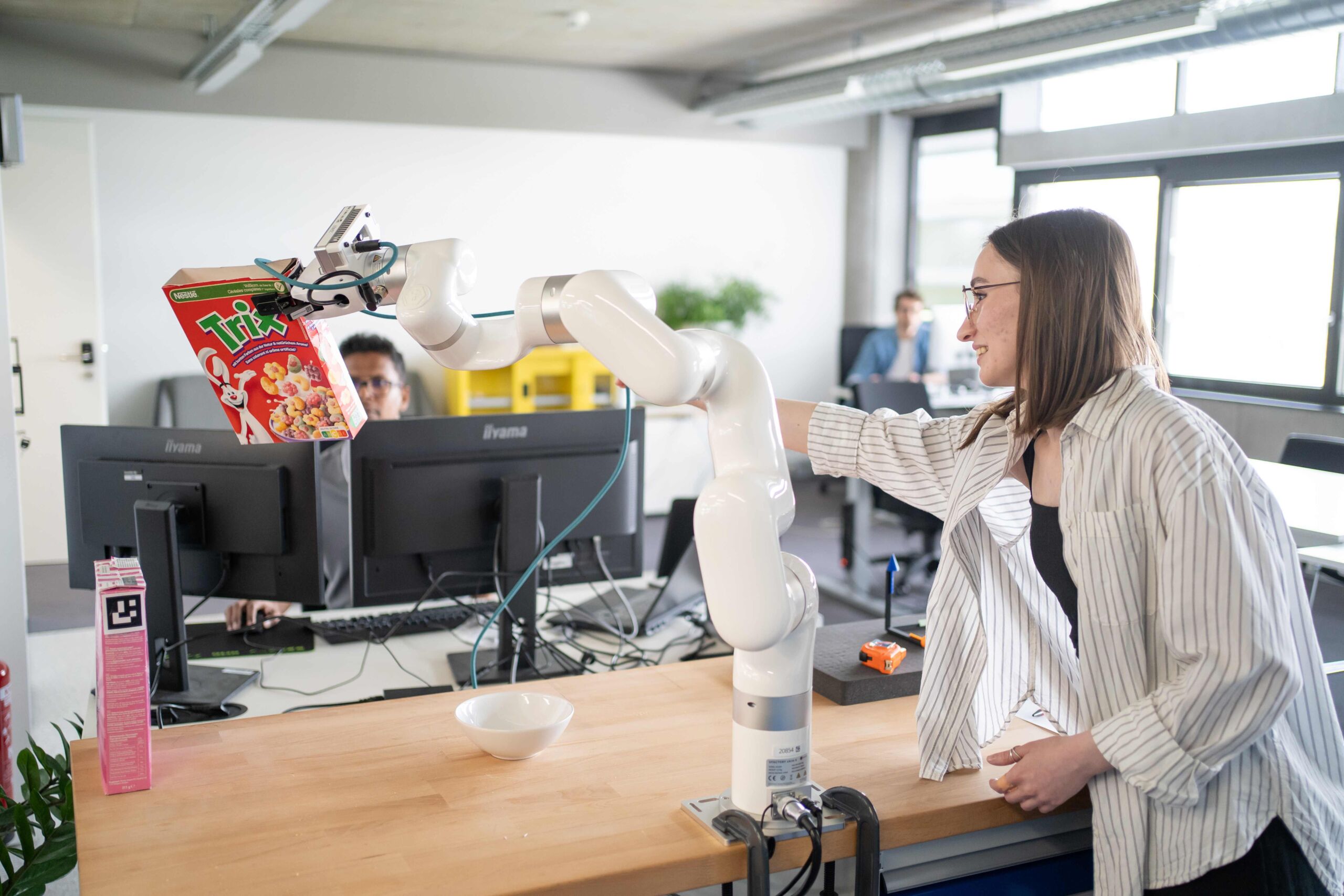
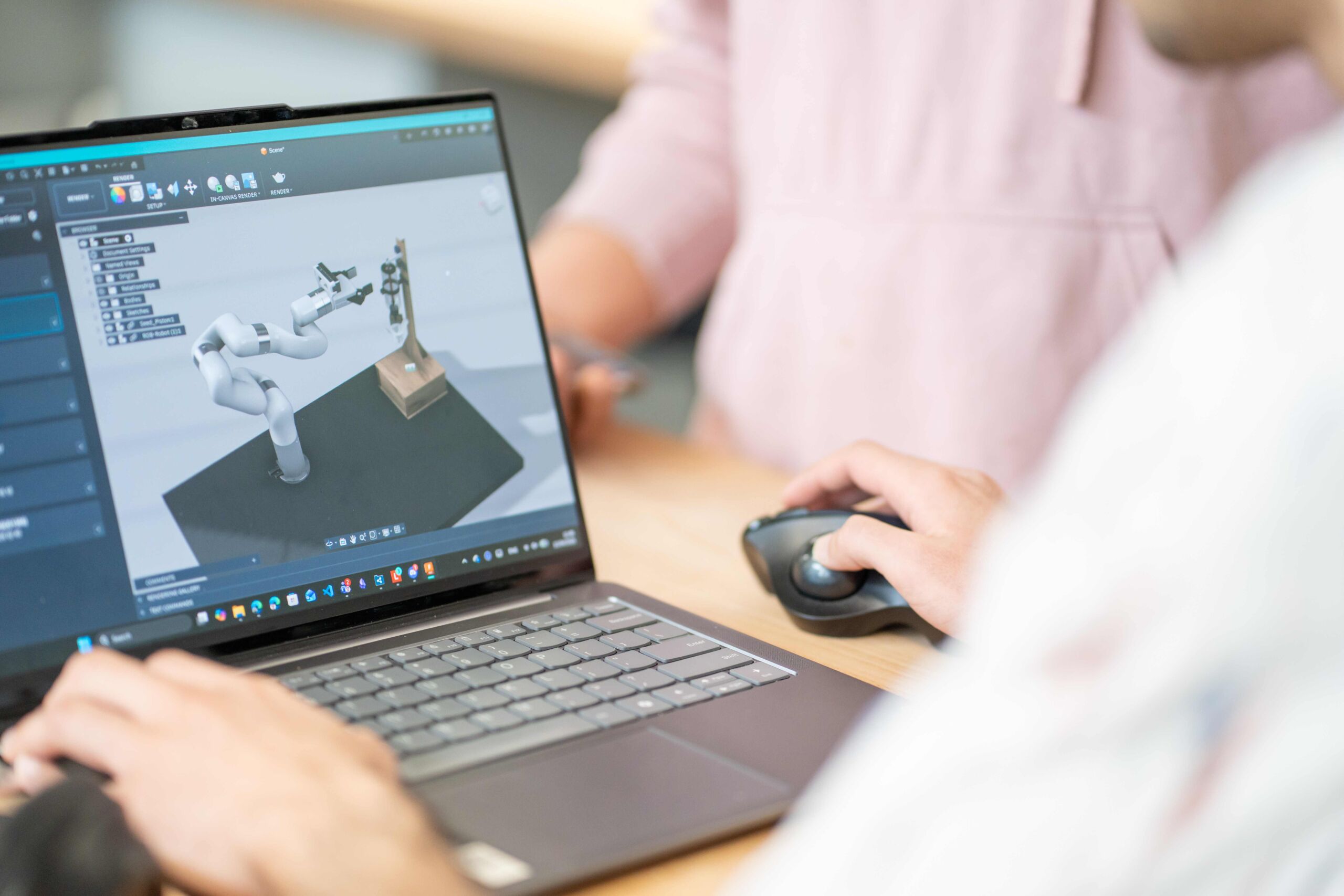
- Robotics Lab (ROB) – working with robotics and intelligent systems
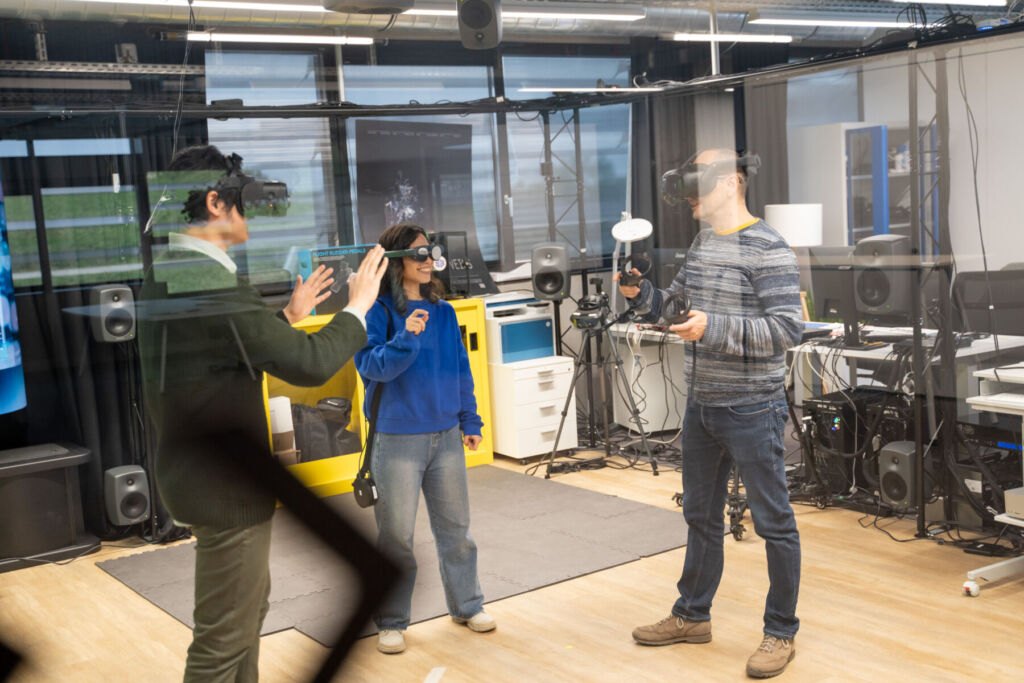
- Extended Reality Lab (RITA) – simulating and analyzing industrial settings in virtual “digital twins”
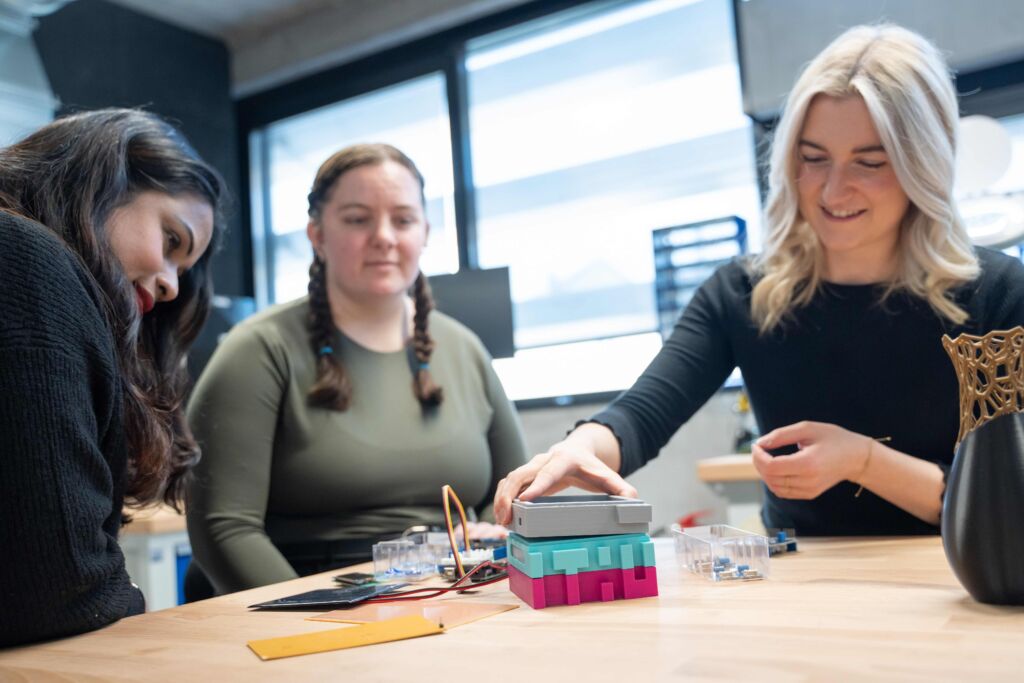
- Digital Production Lab (HANS) – exploring production systems and digital industrial processes
What you will work on
In Future Industries, you work on projects where the goal is to apply computing to real industrial challenges.
Across all projects, you move from understanding the industrial problem to applying computing methods, and to developing and testing solutions in real-world contexts.
Rather than working on isolated technical exercises, you develop projects that connect computing with real industrial production and innovation challenges.
Typical projects focus on:
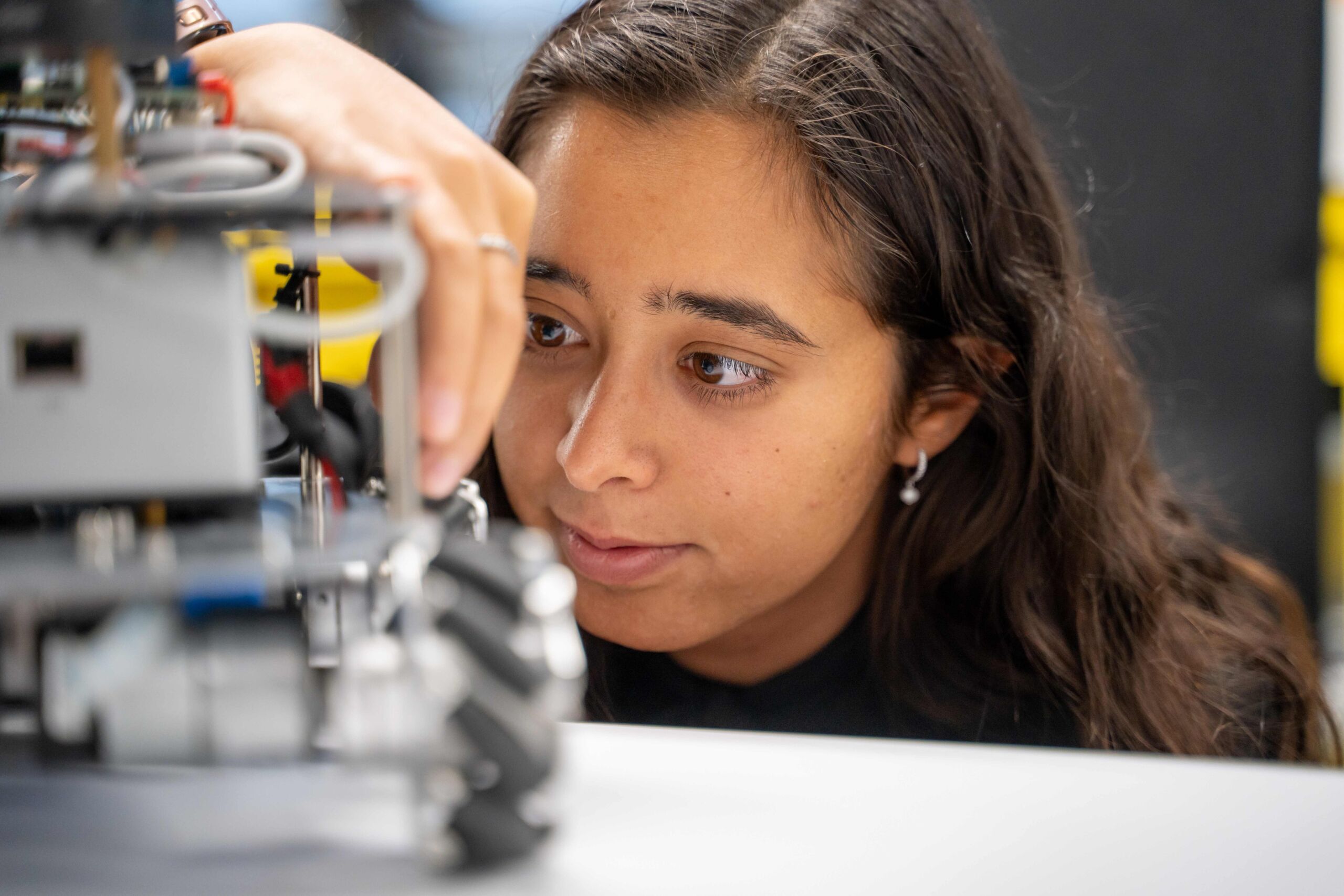
- developing robotic and intelligent systems for industrial settings
- connecting devices and systems through IoT
- exploring predictive maintenance in production environments
- working with digital twins to model and improve industrial systems
- improving supply chain and business processes through computing methods
Project examples:
- build a system that uses sensor data to detect maintenance needs before a machine fails
- work on an IoT-based setup that connects machines, actuators, or edge devices in a production environment
- develop a digital twin to better understand and optimize an industrial process
- explore how robotics can support more efficient and flexible manufacturing
- create collaborative settings where multiple humans and robots cooperate
- investigate how computing can improve supply chain workflows or industrial decision-making
Career directions
Future Industries prepares you for careers where the goal is to apply computing to industrial production, robotic environments, innovation, and connected systems.
What makes these paths attractive is that they are closely linked to how industry is changing today. Manufacturing, logistics, and industrial systems are becoming more digital, data-driven, and interconnected. In other words, you are not only learning how to work with computing technologies, you are learning how to apply them in industrial contexts where efficiency, sustainability, and innovation matter.
Career prospects:
This specialization is especially relevant for roles such as Robotics Engineer, IoT Specialist, Project Manager, Requirements Engineer, Software Engineer/Architect, Digital Manufacturing Specialist, Predictive Maintenance Manager, Supply Chain Manager, Digital Twin Specialist, or Industrial Innovation Consultant.
It is a strong fit for students who want to continue into either industry or academia, as the program highlights both practical and methodological competencies in a project-based learning environment.
Who this path is for
Future Industries is best suited for students who are interested in technology, industrial systems, and innovation, and who want to apply computing in real production and business contexts.
You do not need to come from one specific background, but you should be curious about how intelligent systems, connected devices, and digital processes can transform industry.
This specialization is a strong fit for students from bachelor programs such as:
- Computer Science or Software Engineering – who want to apply computing in industrial contexts
- Mechatronics, Robotics, or Automation – who want to deepen their work with intelligent and connected systems
- Electrical Engineering or Industrial Engineering – who want to connect technical systems with digital transformation
- Data Science, Artificial Intelligence, or Applied Mathematics – who want to work with industrial data and system optimization
- Supply Chain, Logistics, or interdisciplinary technology programs – who want to bring digital methods into production and operations
- Psychology or Cognitive Science – who want to investigate the future role of humans in industrial environments
In terms of mindset, this specialization fits students who:
- want to understand how future industry is shaped by computing.
- enjoy working on practical, system-level challenges.
- are interested in robotics, IoT, digital twins, or industrial innovation.
- prefer working across disciplines rather than staying within one narrow field.
What makes Future Industries at IT:U different?
Future Industries at IT:U goes beyond traditional programs in engineering, production, or industrial technology by combining cutting-edge computing and future industry contexts in one integrated learning experience.
Instead of studying robotics, IoT, supply chains, or industrial systems in isolation, you learn how these areas connect through real-world problem solving. The specialization brings together competencies in robotics, IoT, predictive maintenance, supply chain management, digital twins, and business processes, all within an applied and future-oriented industrial context.
A key difference is the project-based and company-connected approach. The program explicitly states that students engage in real-world problem solving in collaboration with a company network, which means the specialization is closely linked to practical industrial relevance. Another important aspect is the interdisciplinary environment, where computing is not treated as separate from production and innovation, but as a core driver of both.
 © IT:U
“Future Industries aims to deliver state-of-the-art education in industry-related fields such as robotics, machine learning, digital twins, supply chain management, requirements engineering, software engineering, and human factors in safety-critical systems. With that, we hope that our students can contribute to successfully making our industry fit for the future.”Philipp Wintersberger, Professor of Intelligent User Interfaces
You want to study at IT:U?
Are you ready to apply and start transforming tomorrow? Click below! We can’t wait to receive your application.
Gain hands-on experience, work across disciplines, and develop the skills needed for industry or academia in a project-based learning environment.