 Bernd Resch
MOSAIK
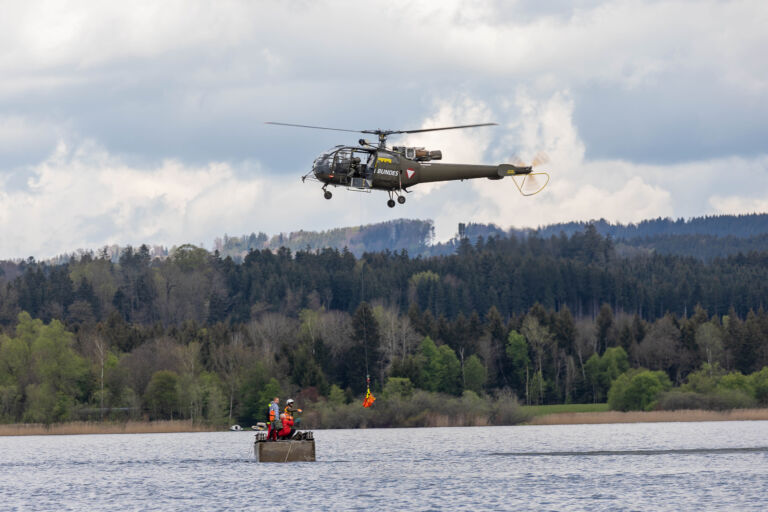
In Austria, Germany, and worldwide, we are increasingly affected by complex crisis situations such as natural disasters, environmental disasters, accidents, or armed conflicts, which require rapid and targeted action. Authorities and organizations with security responsibilities (BOS), aid organizations, the military, operators of critical infrastructure, as well as actors from the economy and industry, must therefore take effective precautions to manage damage and crisis situations. Professional crisis management is based on precise information about the nature, extent, and interconnections of security-relevant events.
To provide decision-makers with a well-founded situational picture, it is essential to consolidate current insights from various data sources and analyze them interdisciplinarily. At present, the evaluation of security-relevant information is mostly limited to regional or sectoral approaches, making it difficult to obtain a comprehensive situational overview. Moreover, previous research approaches lack consideration of the multiscalar structure of crisis events. A multiscalar, cross-border analysis in real-time, based on a multimodal data foundation, does not yet exist but is a crucial prerequisite for improved crisis management (Green Paper Situational Awareness, 2023).
The goal of the MOSAIK project is to analyze and merge multimodal, heterogeneous open-source data sources using the latest methods from the field of Artificial Intelligence (AI) to enable near real-time mapping of complex situational scenarios across different scales. This aims to allow emergency forces to carry out faster, improved, and more targeted deployment planning and first aid. Thematically and methodologically, MOSAIK builds on the results of the BMBF/KIRAS projects HUMAN+, AIFER, and MUSIG.
MOSAIK information originates from various sources, including emergency responders, drones, satellites, geo-social media, mobile network data, sensor data, or news articles. To avoid delays and incompatibilities, data-sharing and information-processing processes must be efficiently coordinated between research/development and users and integrated into established disaster management workflows.
The MOSAIK project aims to research, develop, and test in practice an analytical toolbox for interdisciplinary situational awareness based on open-source data. Across different spatial (local, regional, supraregional) and temporal (before, at the onset, during, and after an incident) scales, the following research and development priorities are pursued:
- Spatiotemporal analysis of mobile network and app data to estimate population density, numbers, and movements
- Algorithms for dynamic detection of disaster hotspots and multimodal situation assessment in geo-social media (space, time, semantics, aspect-based emotions)
- Researching AI methods for ad-hoc evaluation of live data from operations (e.g., drones, photos, or reports)
- Multiscalar situation monitoring through AI-supported geodata services for cross-border, continuous hazard monitoring based on satellite data (Copernicus Sentinels)
- Capacity building and training: structured preparation of project results as a basis for training
Project partners:




Funders: