


Making the invisible visible: new map shows digital services your local government is using
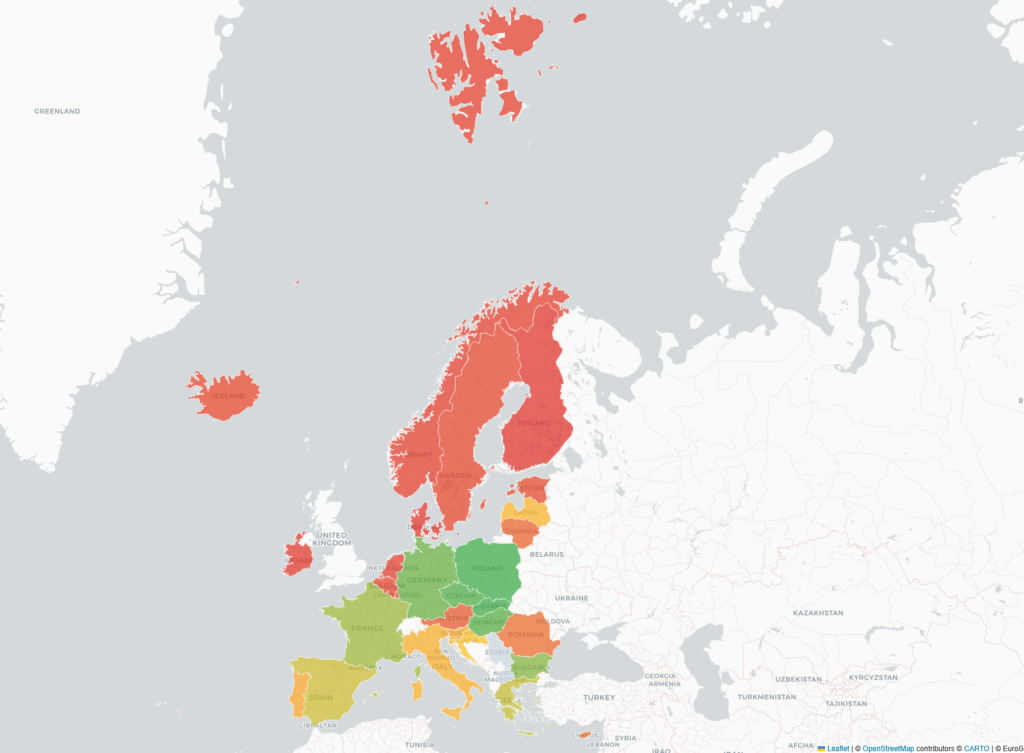
A new map is shedding light on where Europe’s local authorities host their digital services, showing an overreliance on U.S. businesses in some areas, including in Austria.
The researchers from IT:U’s secure and resilient infrastructure team made a mostly hidden part of local infrastructure visible on the map the public now has access to.
“It makes these dependencies visible for the first time, and it allows you to see where municipalities host their services and who is behind them,“ says Dr Florian Holzbauer from IT:U’s secure and resilient infrastructure team.
By visualizing the data, he says, we can move from abstract discussions to measurable and visible facts about digital infrastructure.
 @Municipalytics
What are the patterns?
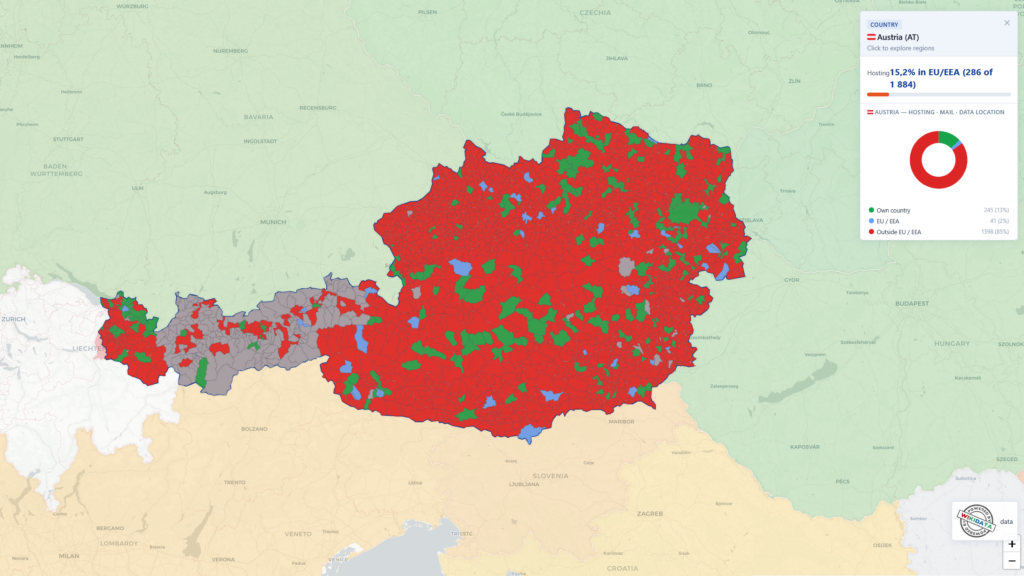
It shows clear regional patterns with many Austrian local governments relying heavily on large email providers, such as Microsoft.
“In Austria, we see a stronger reliance on large external providers, particularly for email services. Only about 50 to 60 percent of services are controlled by EU-based providers in Austria, meaning a significant share depends on companies outside Europe,” says Dr Holzbauer.
Dr Holzbauer has presented and published his findings at the TMA 26 conference.
 @Municipalytics
Upper Austria, he says, “shows a distinct regional pattern, where both global and regional providers are used, but with an unusually strong presence of Microsoft even beyond email services”.
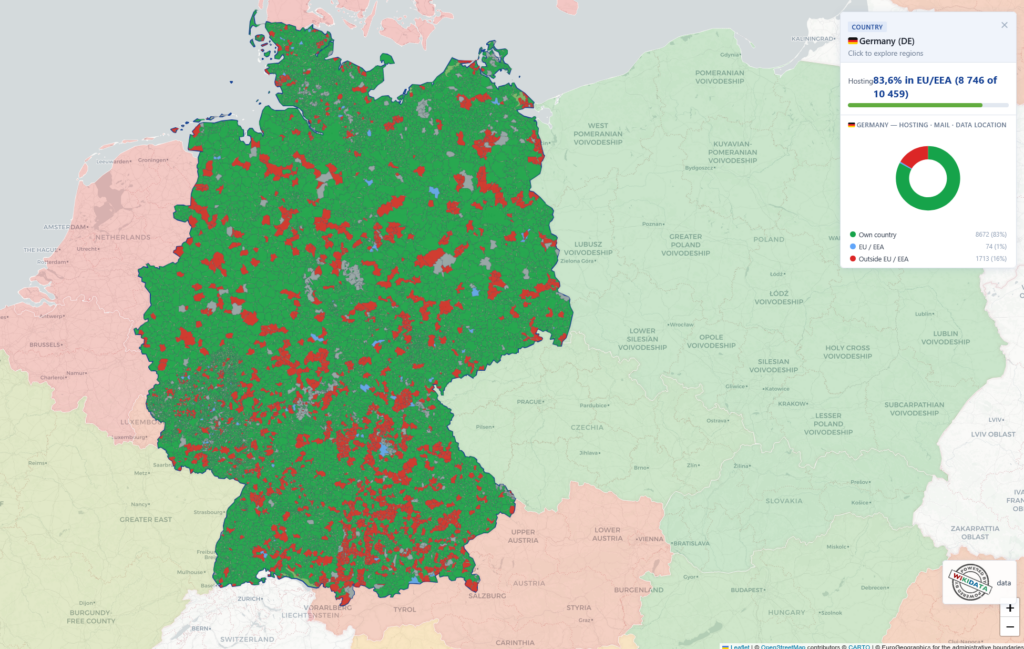
This is in stark contrast to some other central European countries, like Germany, which relies much more on local email providers, resulting in a more decentralized and diverse market.
Services there are not only hosted in-country but also operated by European companies, giving the government greater control.
 @Municipalytics
It is a similar picture in some eastern European countries that also have a more diversified and independent market, but Northern Europe is in contrast highly reliant on the U.S. market.
What is the risk?
This raises questions about sovereignty, and who controls and owns public data and infrastructure.
“The servers may be physically located in Europe, but they are often operated by companies headquartered outside Europe. You can store data in Europe, but that doesn’t necessarily mean Europe is in control,” says Dr Holzbauer.
And as relations with the United States sour, it might be time for a re-evaluation, because he adds “for a long time, governments prioritized cost and convenience, but recent developments are pushing them to rethink their dependence on external providers.”
While there are European alternatives, “scaling them to the level of global providers remains a challenge” and will require political and industry commitment.