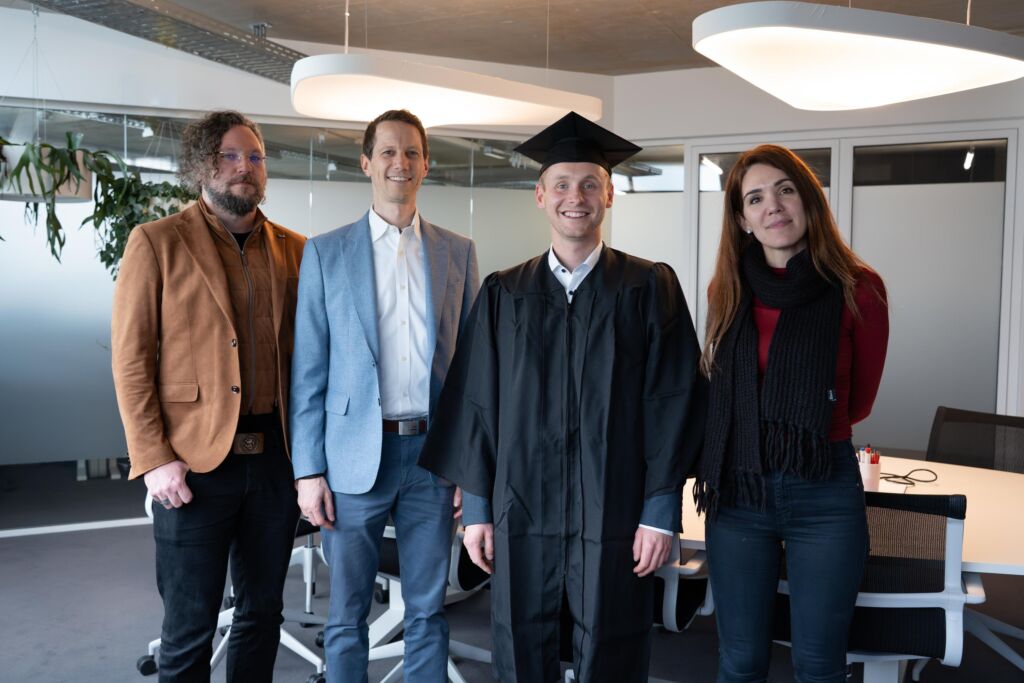


IT:U’s first PhD defense examining what it takes to make our streets safer for cycling
It is springtime, and people will often choose their bike over their car or public transport during the longer daylight hours when they feel safe on the streets.
But what makes cyclists feel unsafe, and how can we measure it and ultimately improve their experience?
Martin Moser, PhD, from IT:U’s GeoSocial AI Research Group has successfully defended his thesis looking at the topic.
“We equip people with these sensors, we measure when and where they are stressed, it comes through on the GPS data of the smartphone and then if 30 out of 40 people are stressed at the same intersection, it makes sense to change something there or investigate further what the potential drivers of stress are in this case”.
IT:U’s Martin Moser, PhD.
Method increasing perceived safety
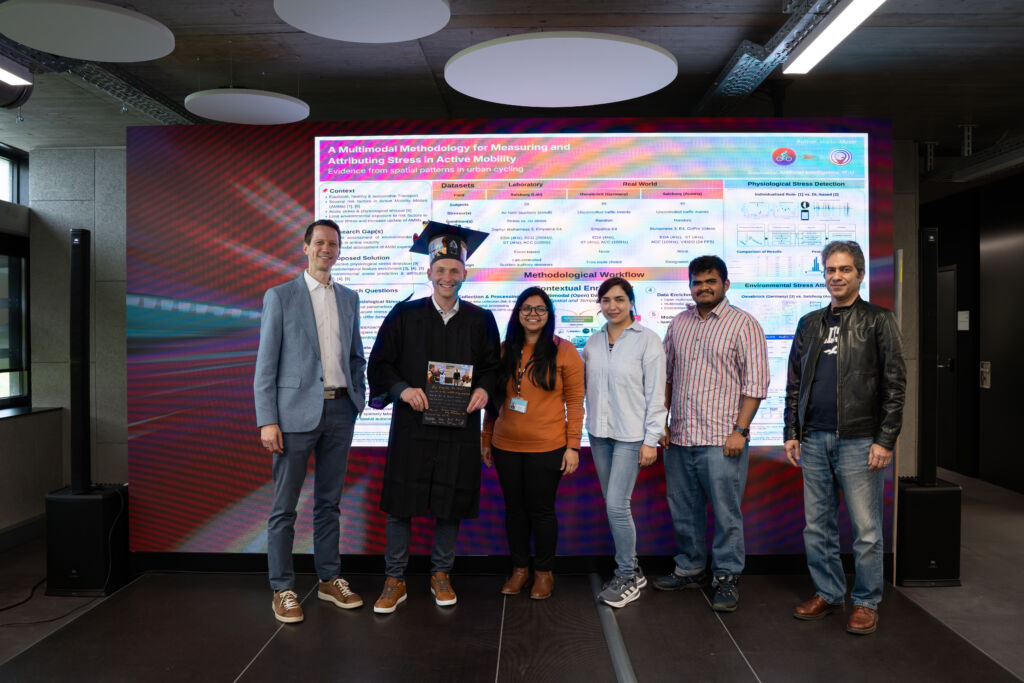
After being the first to defend his PhD at IT:U, Martin Moser says he is “relieved and happy to see so many people attending, and proud to be IT:U’s first graduate and to have completed my PhD journey”.
His supervisor, Professor of Geosocial Artificial Intelligence, Bernd Resch, says it is a milestone.
The research team’s approach already garnered interest from authorities in Salzburg when they encountered a tricky traffic situation in the city’s outskirts some time ago. In Faistenau, the construction of a new supermarket along a busy road created a potentially hazardous pathway. The analysis objectively highlighted the location and provided a solid basis for targeted measures to mitigate the danger.
“On one hand we drive a lot of research papers, but then again, what they did is go to the public and said: ‘This is a scientifically sound algorithm and approach, and here we have it black and white, we need to build a bike path here’.”
Bernd Resch, Professor of Geosocial Artificial Intelligence at IT:U.
Professor Resch says the algorithm is already working well, and if a city council or planning agency calls them with a specific problem at an intersection or a street, they can “go there, conduct a study, and help them sort out the planning”.
But he cautions the method is still in its infancy, and there is stilla long way to go before it could be rolled out on a larger scale.
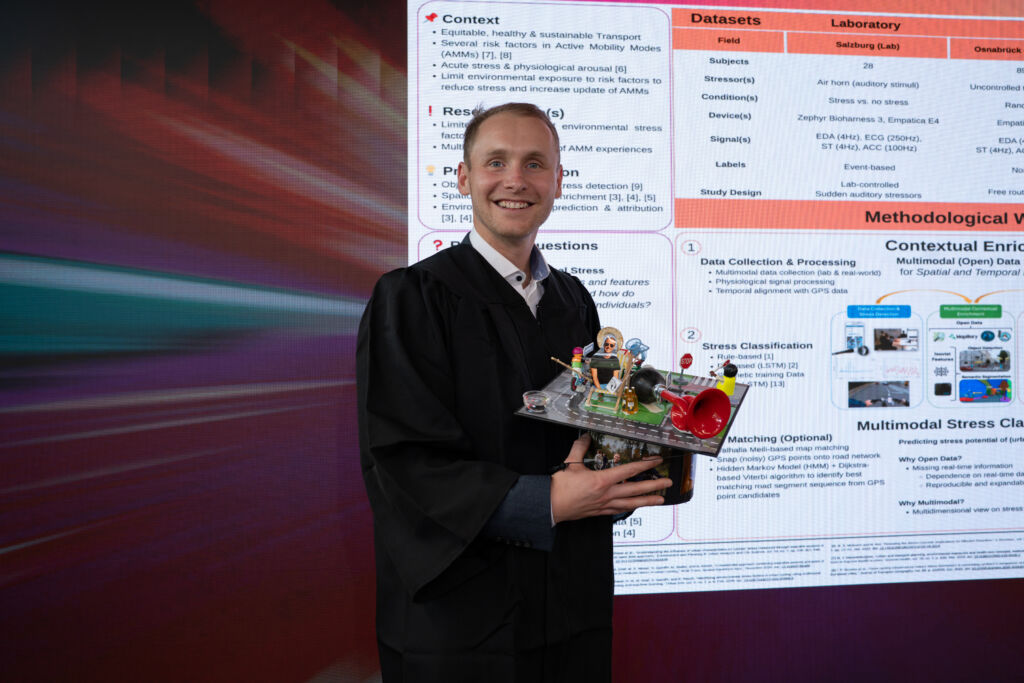
IT:U’s interdisciplinary approach helped shape research
Martin Moser started looking at the topic at the University of Salzburg, and continued working on it at IT:U. Further longstanding partners include Karlsruher Institut für Technologie (KIT), the city of Osnabrück and Outdooractive.
He says the difference between the two universities is their focus on interdisciplinarity, with his research at IT:U requiring knowledge in various scholarly areas, including machine learning, urban planning, and explainable AI.
His highlight these past years was writing his thesis, while he experienced his lowest point when an algorithm did not do its job as intended.
But as he is a keen tennis player, his sportsman attitude helped him overcome the challenges and keep going.
Martin Moser is staying at IT:U as a postdoc, where he plans to do further research in this field.