

First Lecture: How technology, policy and human choice shape sustainable decisions
A label on a menu, a tax on petrol, or an agent offering advice may all seem unrelated, but they can all help people make better and more sustainable decisions. The latest IT:U First Lecture has explored this topic by showing how digital tools and public policy help shape the choices we make every day.
Shaping sustainable choices
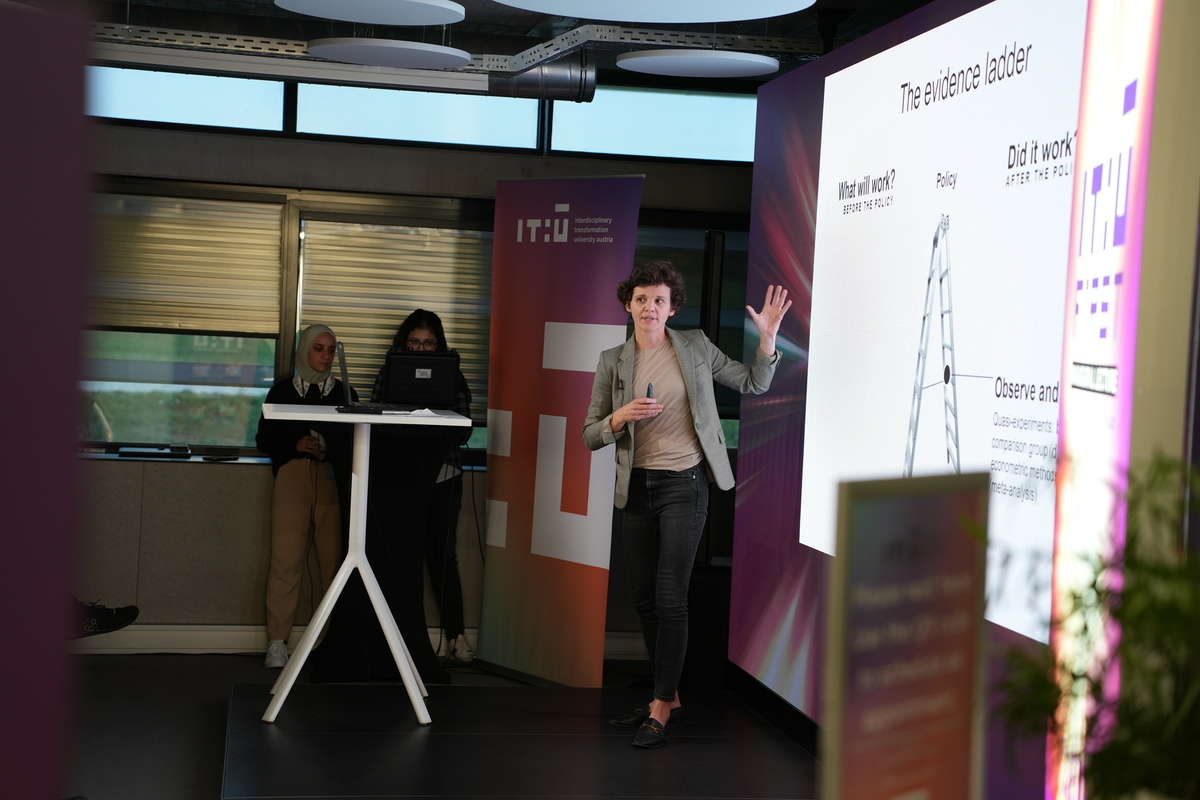
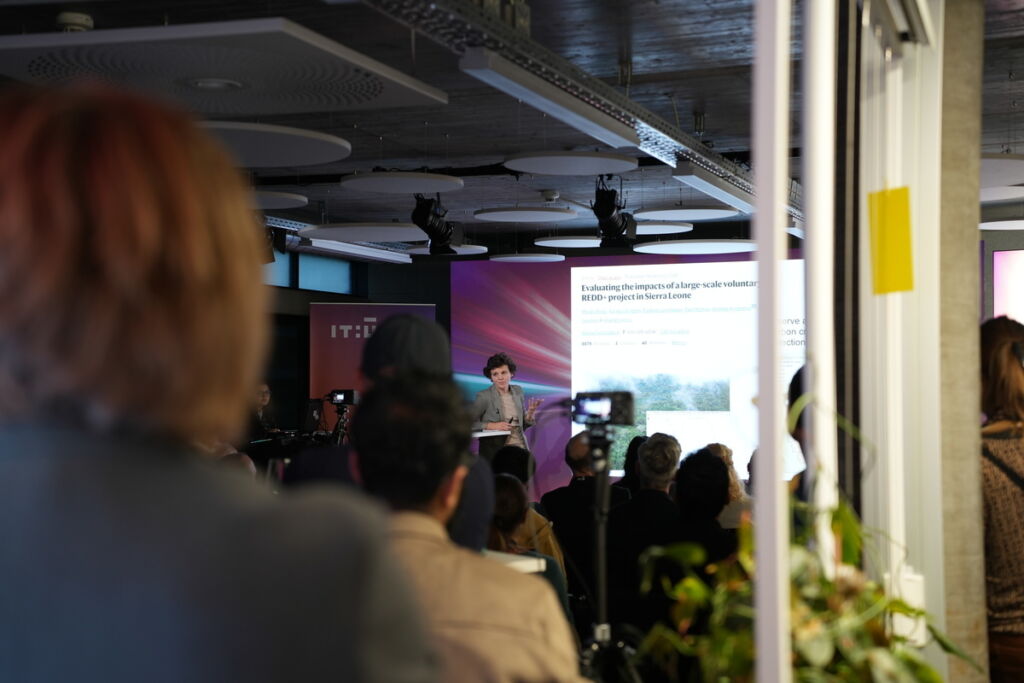
Elisabeth Gsottbauer, new Professor of AI & Machine Learning Based Sustainability Policy, says some political measures have succeeded in changing behavior, while others barely make a difference.
“A policy wants to move you,” she says, “whether through prices, regulation or information, the goal is always to steer people towards a particular choice”.
Yet evidence suggests changing behavior is rarely straightforward.
“What I do in my research is try to check whether these policies are working and, if not, test alternative designs to see how we can make them work.”
Professor Gsottbauer highlights a program in West Africa, where communities were paid to protect their local rainforest.
Using satellite photos and more than a decade of data, she and her colleagues have found that these payments helped reduce deforestation in the area and therefore protect the environment.

Limited impact, surprising side effect
However, other interventions have led to less impactful results.
By adding carbon labels to restaurant menus, she and her team tried to highlight the climate impacts of different meals, but most diners did not care as much.
“We found that demand for more climate-friendly food increased by only one to two per cent,” Professor Gsottbauer says.
But there was an effect, just not where they expected.
Reluctant to display dishes with a poor climate rating, some restaurants began removing their highest-carbon meals.
“The labels hardly changed consumers, but they changed what suppliers decided to offer,” she says.
When technology starts making decisions
Public policy is not the only area shaping the choices people make. Increasingly, technology plays a role too.
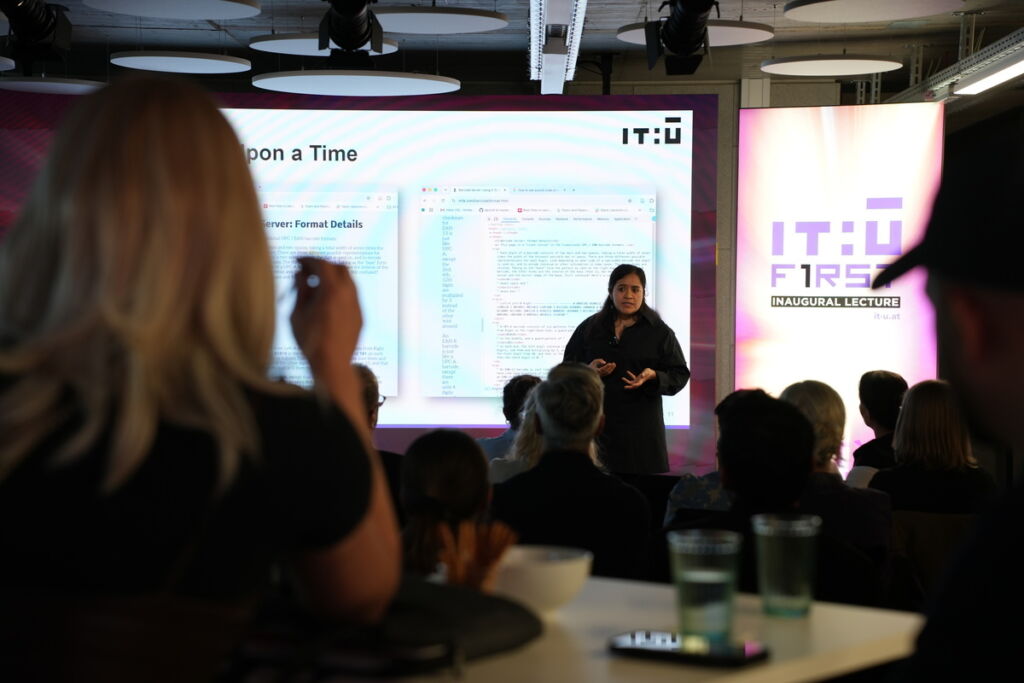
“We have changed the one thing that computers used to do,” Kimberly Garcia, IT:U’s new Assistant Professor of Intelligent Systems and Sustainable Industries, says.
“They used to be deterministic, so you knew what answer a machine would give. Now, with generative AI, we don’t. AI is powerful, but it also makes things up.”
Generative AI has become possible, she says, because computing power, or hardware, and vast amounts of data are now available online.
As people spent decades posting, sharing and interacting on the web and on social media, they created the data needed to train increasingly sophisticated AI models.
The challenge, she says, is how AI can be used safely. The stakes rise in particular when we move into fields where mistakes can have serious consequences, such as in medicine.
“We cannot blindly trust something that might tell you, ‘You might have cancer, 95 per cent’, as the five per cent matter,” she says.
A companion you can trust
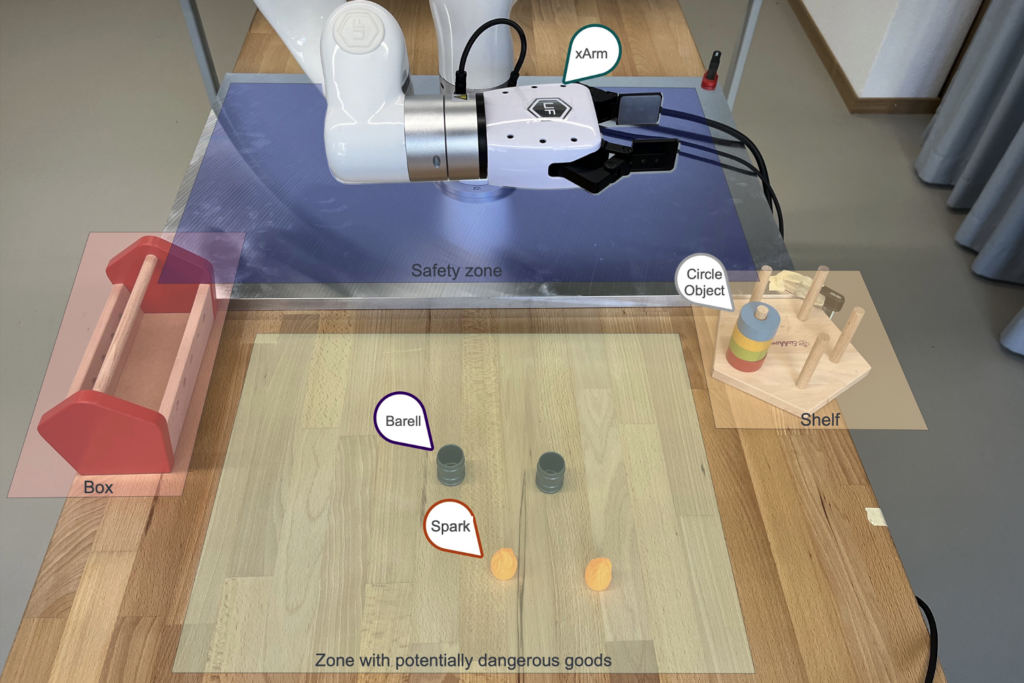
Assistant Professor Garcia’s research explores how modern AI can be combined with more traditional rule-based systems to make it safer and more reliable.
One possible application is a digital companion for smart homes and workplaces. Prototypes already exist.
“That environment would know how to control things such as the thermostat, the lights in a room, or a robot. Your personal digital companion would negotiate with an intelligent environment, and together they could adapt the space to your needs.”
However, the key principle, she stresses, is that people remain in control of the decisions and their own data.
Both lectures highlighted a common theme: whether through public policy or intelligent technology, what matters is not only what we design, but how it works in practice, how people respond, and what triggers change.
IT:U Founding President Stefanie Lindstaedt summarizes:
“Shaping the future takes more than new technologies. It is equally important to understand how people interact with them and how we can put them to beneficial use for society and the economy. At the same time, the major challenges of our time cannot be solved from the perspective of a single discipline alone. The research conducted by Elisabeth Gsottbauer and Kimberly Garcia demonstrates the importance of bringing technological and societal perspectives together to actively shape transformation.”