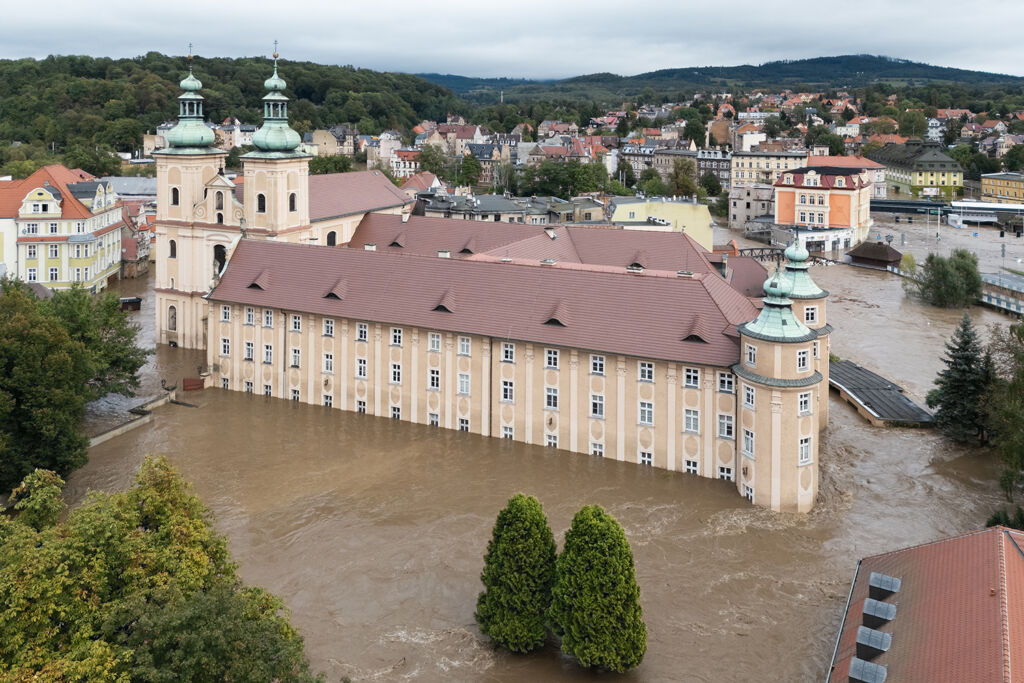


Climate change linked to increase in river levels, new study
The devastating floods that struck north-eastern Austria in autumn 2024 left a trail of destruction across the region. The fact that such large amounts of rain fell within just a few days was partly linked to climate change. A new study now shows that it had an even greater impact on river levels.
Storm Boris brought days of heavy rain and severe flooding to parts of Central and Eastern Europe in September 2024.
Austria, particularly Lower Austria, was among the countries most affected, with rivers overflowing and widespread damage reported across the region.
Previous studies found that climate change intensified the rainfall during Storm Boris.
But the new study, led by the Helmholtz Centre for Environmental Research (UFZ), and involving IT:U Assistant Professor of Machine Learning in Earth Science, Daniel Klotz, looked at how climate change influenced peak river levels during the floods.
The researchers combined climate and hydrological models to analyze how rainfall translated into flooding.
They found that the impact of climate change was greater on flooding than on rainfall.
While a warmer climate increased the amount of rain brought by Storm Boris, it had an even larger effect on flood levels.
Lead author Peter Miersch says the difference comes down to how landscapes respond during extreme rainfall events.
“The soil can initially absorb some of the rain during a heavy rainfall event,” he explains, “but eventually the soil becomes saturated, and every additional millimeter of rain flows directly into the river”.
Once that point is reached, even relatively small raises in rainfall can trigger a much larger increase in runoff and river levels.
The findings could have implications for how future flood risks are assessed.