The Space Technology Lab is part of the Infineon lab cluster, established through IT:U’s strategic cooperation with Infineon Austria.
This lab aims to push the boundaries of what is possible in Earth observation, satellite communication, and autonomous space exploration. The creation of SPOK is driven by a simple yet ambitious goal: to demystify space technology and make it an accessible, hands-on learning experience.
In an era where digital transformation is reshaping every industry, the space sector is undergoing an unprecedented revolution driven by miniaturization, artificial intelligence, and smart sensors. The SPOK Lab was born from this convergence and will serve as a nexus for interdisciplinary collaboration, bringing together students from diverse backgrounds to solve the complex challenges of deploying intelligent systems in the space environment.
Over the next three years, our main mission is the design, development, integration, and launch of IT:U’s first CubeSat.
Lab Persona
Like his movie star alter ego serving as science officer on a spaceship, SPOK is fascinated with exploring space and discovering new applications of space technology to the benefit of mankind. He believes that the limit for people to get involved in space flight should be as low as possible, connecting us with the endless cosmos surrounding us.
Key Equipment & Technology
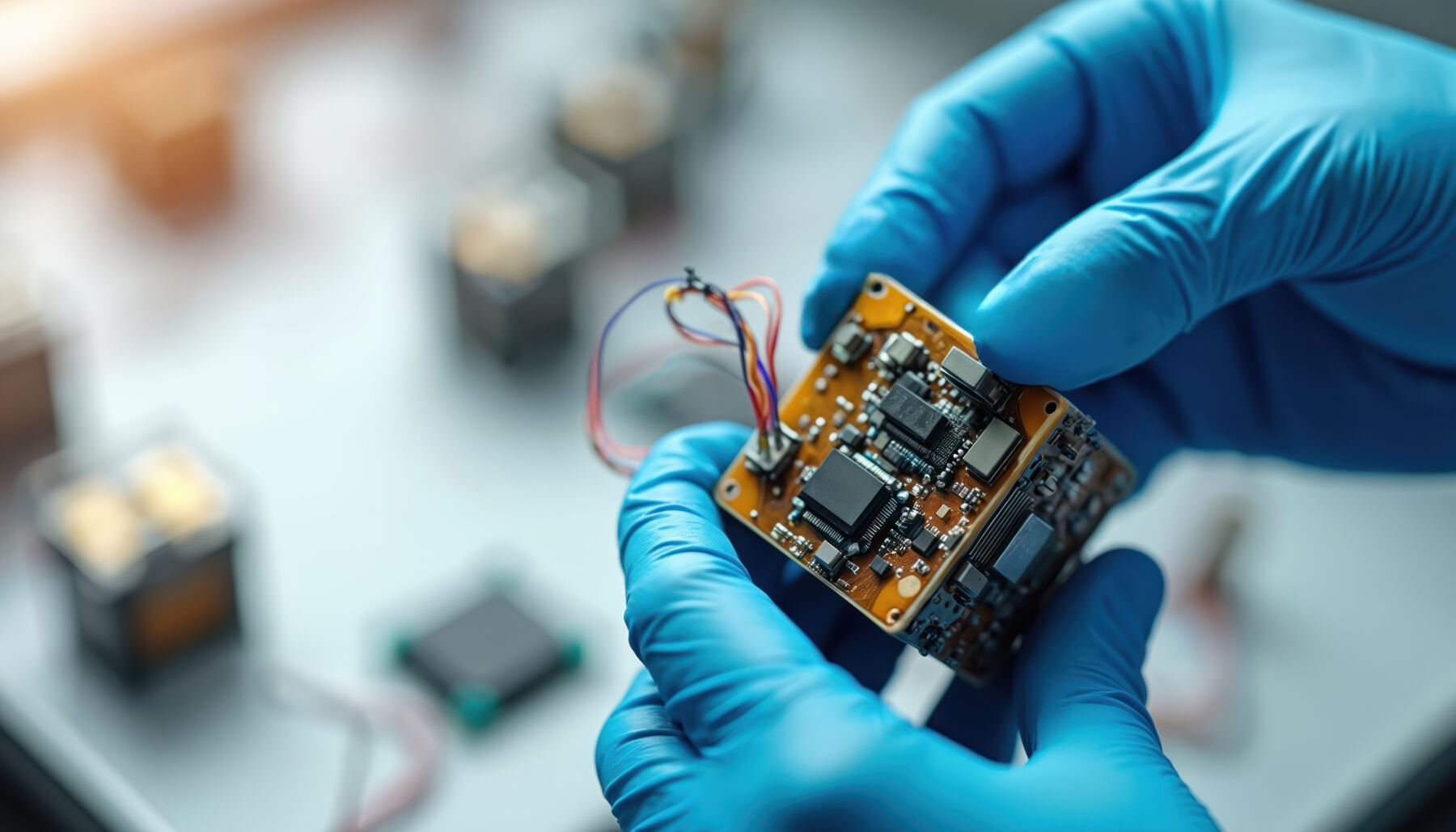
Here, students plan, develop, manufacture, and control simulated and actual satellites orbiting Earth.SPOK will be equipped with state-of-the-art hardware and software, including:
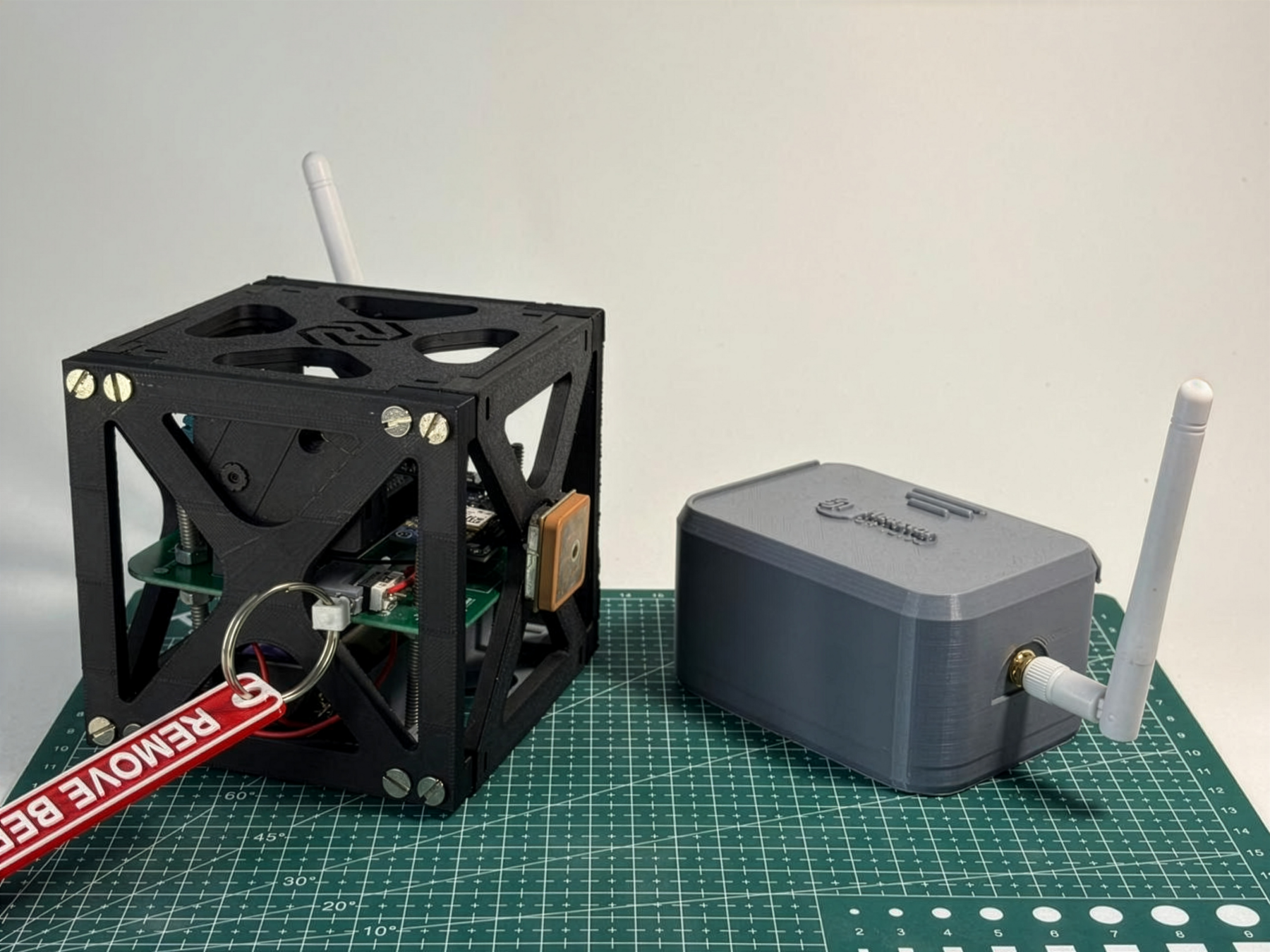
- CubeSat Development Platform: The core structure and subsystems for our flagship satellite.
- Educational Satellite Kits: For foundational training and rapid prototyping of subsystem concepts.
- A Dedicated Ground Station: For tracking, communicating with, and controlling our satellite once in orbit.
- Environmental Testing Equipment: Access to facilities for simulating the launch and space environment (e.g., vibration table, thermal vacuum chamber).
- Rapid Prototyping Tools: 3D printers, PCB milling machines, and electronics workstations to build custom components and payloads.

Project-based learning
SPOK is a hands-on engineering hub that welcomes students and collaborators from different backgrounds. Examples of learning projects include:
- On-Board Data Processing (Edge AI): Implementing and testing lightweight machine learning models on radiation-tolerant microcontrollers for real-time data analysis and event detection in orbit.
- ️Smart Sensor Integration: Designing and integrating advanced sensing payloads, including hyperspectral imagers and IoT-based sensors, for novel Earth observation and scientific missions.
- Fault-Tolerant & Resilient Systems: Developing robust software and hardware architectures that can withstand harsh radiation, temperature fluctuations, and the vacuum of space.
- Low-Power Embedded Systems: Mastering power management techniques to ensure that the satellite can operate efficiently using only the energy harvested from its solar panels.
- Satellite Communication Protocols: Establishing a reliable data link between our CubeSat and a dedicated ground station, enabling command, control, and data downlink.
- Space Systems Engineering: Applying systematic approaches for the complete project lifecycle, from mission definition and requirements engineering to verification, validation, and pre-launch testing.
Meet the expert
Meet Luigi Capogrosso, SPOK’s LearnLab Expert and Postdoctoral Researcher at IT:U, advised by Fellow Prof. Michele Magno.
Luigi completed his Ph.D. in Artificial Intelligence (Cum Laude) at the Polytechnic of Turin in collaboration with the University of Verona, under the supervision of Prof. Marco Cristani and Prof. Franco Fummi. He received his B.Sc. (2019) and M.Sc. (2021) from the University of Verona in Computer Science and Computer Engineering for Robotics and Smart Industry, respectively.
Additionally, Luigi was a visiting scholar at the Instituto Superior Técnico, working with Prof. Mário A. T. Figueiredo. His research interests cover the broad area of learning, specifically focusing on efficient machine learning, learning-enabled cyber-physical systems, and representation learning.