

Earth Observation and GeoAI for Climate-Resilient Urban Systems : IEEE GRSS School
- Host: Interdisciplinary Transformation University (IT:U), Linz, Austria
- Address: IT:U Research Campus, Freistädter Str. 400, OG1 4040 Linz, Austria (Gold Meeting room)
- Dates: 14–16 October 2026
- Format: In-person, 3-day program
- Organizing body: IEEE GRSS (with Austrian, Italian and Polish chapters), IT:U and PLUS
- Organizing committee: Shaily Gandhi, Bernd Resch, Martin Sudmanns, Karima Hadj-Rabah, Getachew Gella, Pawel Netzel
- Participants: ~30 (young professionals + graduate students)
- Speakers: 10 +
- Language: English
- Registration: Link
About the school
Earth Observation and GeoAI for Climate-Resilient Urban Systems is an advanced school designed to equip the next generation of researchers, practitioners, and decision-makers with state-of-the-art Earth Observation (EO), geospatial artificial intelligence (GeoAI), and data fusion methodologies to analyze, quantify, and mitigate climate-driven risks and effects in urban systems.
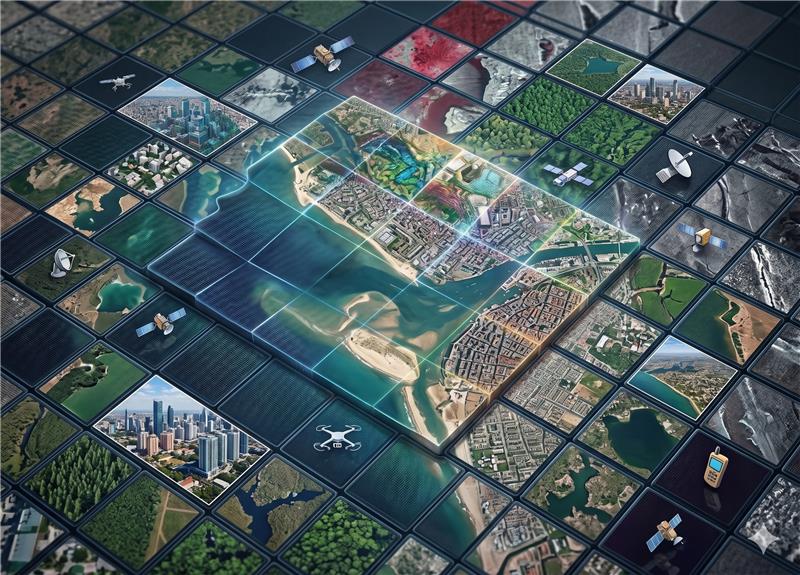
Within this framework, climate-resilient Urban Systems are understood as complex socio-technical systems composed of buildings, critical infrastructure, transportation networks, public spaces, and human communities. The program emphasizes how Earth Observation (EO), multi-sensor data fusion (including optical, SAR, and microwave EO), geospatial artificial intelligence (GeoAI), and participatory sensing can be integrated to strengthen urban resilience under conditions of climate change and multi-hazard exposure.
The school combines expert lectures, structured hands-on laboratories, and a Digital City Studio living-lab experience to advanced EO analytics, GeoAI model development, and operational decision-making contexts. Participants will work with satellite imagery (Sentinel, Landsat, SAR, microwave missions), airborne data, in-situ measurements, geo-social media data and human-generated datasets using open-source tools and AI-driven methodologies to develop scalable scalable, explainable, and transferable workflows for urban risk intelligence, infrastructure vulnerability assessment, and climate perception analysis.
Learning Outcomes
By the end of the school, participants will be able to:
- Analyze and quantify climate-related hazards affecting built environments using multi-source Earth Observation datasets (including optical, SAR, and climate data).
- Design and implement multimodal workflows integrating satellite, in-situ, and human-generated data.
- Understand the value of GeoAI-based methodologies for analysing geo-social media data to deconstruct climate perception, narratives, and socio-environmental interactions in urban contexts.
- Develop AI-based classification models for disaster damage and infrastructure vulnerability assessment.
- Adapt remote sensing methodologies to low-resource and humanitarian contexts using open-access tools.