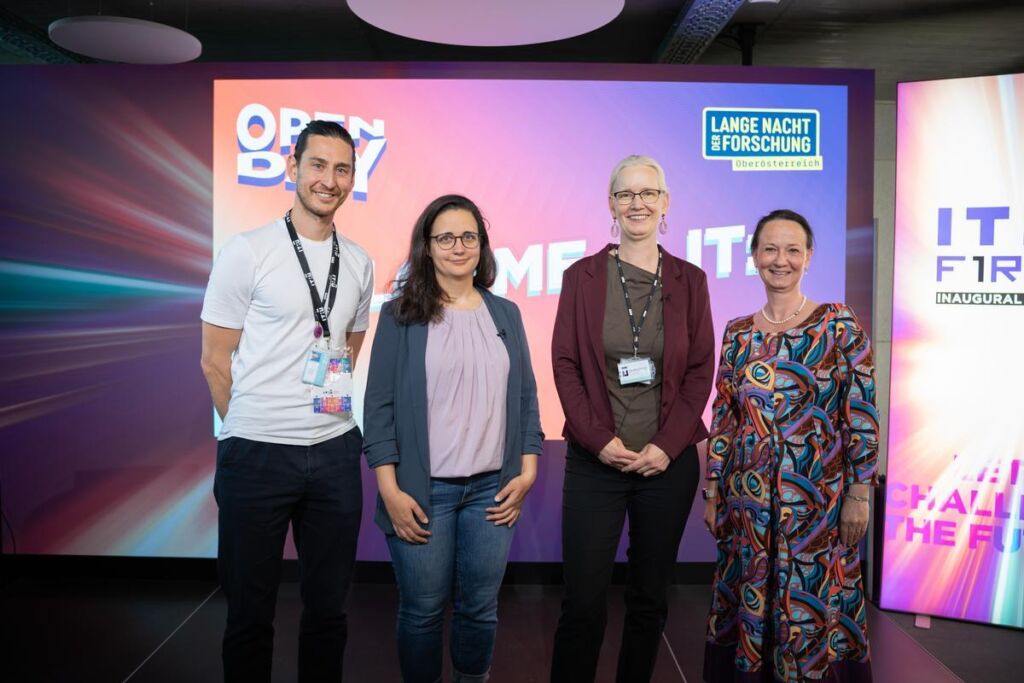


First lectures: from quantum tech revolutionizing our world to cybersecurity to keep us safe
Quantum technologies could revolutionize our world – in areas as far reaching as medicine, modern communication, and, of course, computers.
Quantum theory has been around for more than 100 years and describes the behavior of the tiniest particles in the world, but what was once theoretical is now becoming increasingly more tangible.
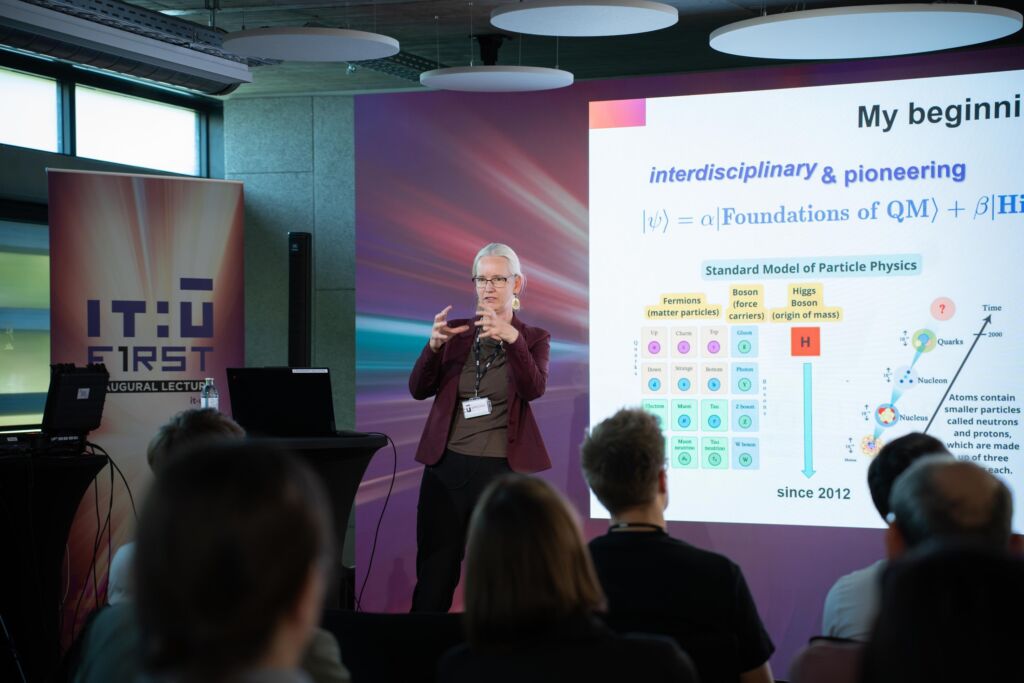
IT:U is now also going quantum with Professor of Quantum Information, Beatrix Hiesmayr, giving her first lecture on how these quantum particles would change the world as we know it, because she says, “their underlying principles differ fundamentally from those driving today’s devices”.
At the core is a principle called entanglement, which is what links particles together; so that what happens to one also happens to another, no matter how far apart they are.
“That is the essence; that is the new resource. Quantum Revolution 1.0 means we had to discover the quantum laws.Right now, a second revolution is happening, and we ask: ‘what can we do with quantum entanglement’?”
IT:U’s Professor of Quantum Information, Beatrix Hiesmayr.
2nd Revolution: Quantum in Medicine and Secure Communication
As we are only beginning to master quantum principles, one area with enormous potential for this second revolution is in medicine.
Professor Hiesmayr collaborates with a team of scientists in Poland, who developed a new imaging device similar to PET scanners running in hospitals (PET=Positron Emission Tomography).
She uses quantum theory to help make the images the scanner takes clearer, which helps to detect cancer earlier through quantum fingerprints that “do not only rely on classical information but also on quantum information. This could give more indicators to doctors”.
This type of scanner would also be cheaper to produce, which would make a rollout to smaller hospitals more likely.
Another area she is working on is new ways of computing utilizing neutrons falling into the earth’s gravitational field.
At IT:U she will also build a quantum lab, where she plans to link light particles to assess different types of entanglement, which will be important for the future of quantum computing and secure messaging.
The quantum technologies offer greater encryption potential than classical forms since they work differently, with Professor Hiesmayr saying “you can really generate a secure key where no eavesdropping can happen; that is also connected to entanglement”.
Her research shows that next to being un-hackable, an ‘automatic alarm’ based on quantum principles would also alert the sender and receiver of any hacking attempt.
Current weaknesses of encryptions and the ethical hacker’s mindset
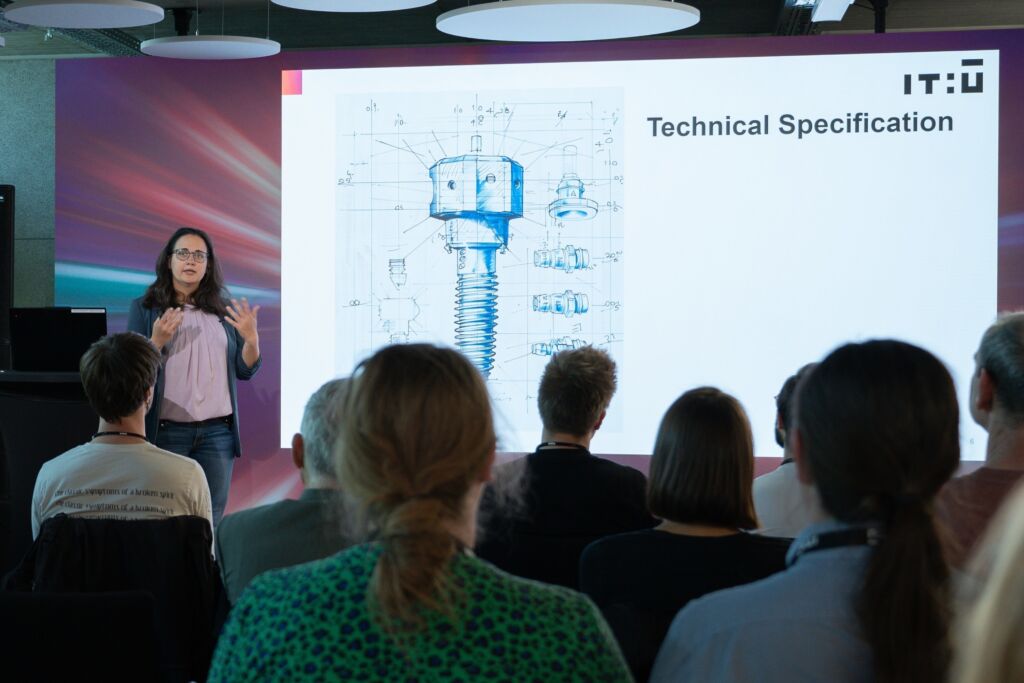
While Professor Hiesmayr’s work is focusing on developing these uncrackable communication systems of the future, current encryption technologies are already in use, and in her first lecture, Professor of Security at IT:U, Johanna Ullrich, is giving us a glimpse into her area of research and a hacker’s mindset.
“We ask ‘is there anything the machine could do that it should not?’ It is hard to prove security.”
IT:U Professor of Security, Johanna Ullrich
Professor Ullrich and her team hack into systems before problems arise to alert businesses or governments about potential threats for the benefit of society.
One area she focuses on is network security and the encryptions that protect messaging systems, such as WhatsApp or Signal.
She helped show the weaknesses of these encrypted communication systems by tracking people’s activity.
“I can still measure time, how long it takes to send you a message, and then I get a receipt from the phone. And from the time it takes I can infer something about your activity pattern – when you look at your phone, I can see whether you are connected via Wi-Fi or mobile network, and I can fingerprint your device.”
IT:U Professor of Security, Johanna Ullrich.
The team has also found activity in countries where messaging systems, such as WhatsApp, are banned, including in North Korea.
She calls for defense in depth, which means that multiple protection measures run parallel to each other, so that if a bad actor hacks into one, there will be a backup.
And she also emphasizes that Europe needs digital sovereignty and should not rely so extensively on outside platforms in an increasingly politically unstable world, because “it could be a real disadvantage in a crisis”.
“Microsoft is big in hosting email providers for universities, municipalities etc. And if the service is down, then people in these institutions would not be reachable anymore.”
Professor Ullrich has also looked at using the internet as a sensor for the war in Ukraine, and for understanding threats to critical infrastructure, such as the power grid.
Her current research focuses on internet mapping and cartography, where she and her team use methods, such as internet measurements, open-source intelligence and interviews, to gain insight into potential weaknesses of critical infrastructure, including power grids.