

Network Spotlight – More Than Cognition: Socio-Emotional Processes in Learning With Human and AI Tutors
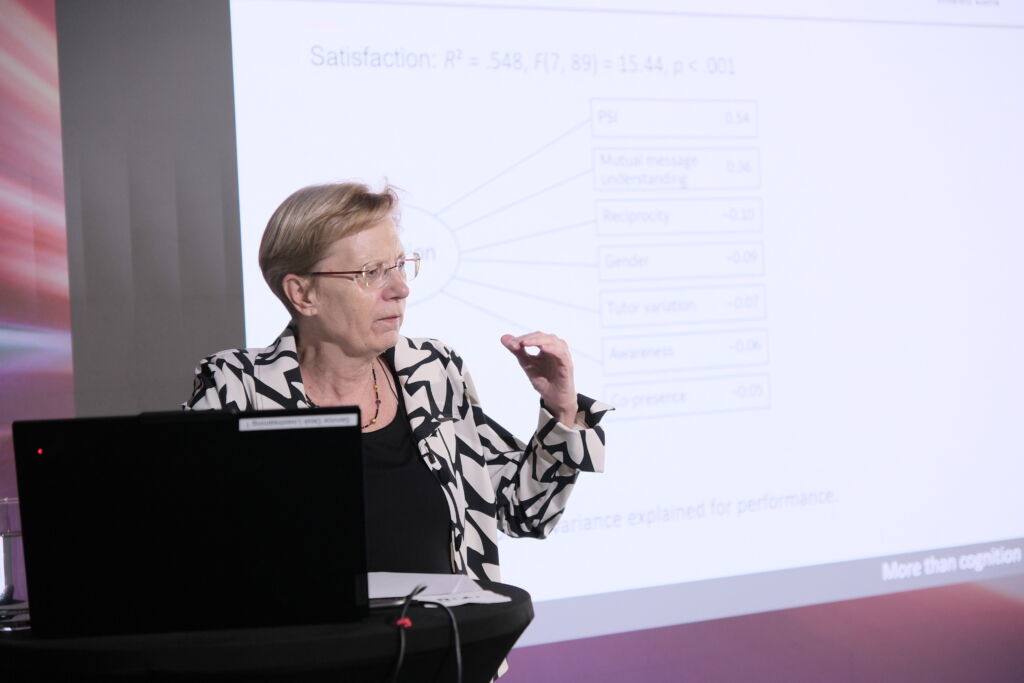
Learning is not only about processing information. It’s shaped by how we feel, how we relate to others, and how we interact with the systems that support us. In the latest edition of IT:U’s Network Spotlight on January 27, 2026, Fellow Professor Manuela Paechter explored the socio-emotional side of learning and asked what it takes to design learning environments, human and AI-powered, that uplift motivation, satisfaction, and performance.
Beyond Cognition: Socio-Emotional Learning with Human and AI Tutors
Learning is not a purely cognitive endeavor; it unfolds through the interplay of thinking, feeling, and relating. Across the lifespan, the quality of interactions between learners and instructors shapes motivation, persistence, and the depth of understanding. These relationships are central to achieving desirable learning outcomes. As artificial intelligence (AI) becomes more integrated into education, the until now widely neglected question of how to support socio-emotional processes grows more urgent.
In her keynote Manuela Paechter dived into how learners engage differently with human versus AI-based tutors, examining the nuances of feedback, tone, empathy, and responsiveness. Drawing on empirical studies, she highlighted practical implications for designing learning environments that integrate both cognitive and socio-emotional dimensions, ensuring that AI complements human instruction to foster performance, motivation, and satisfaction.
Fueling Lifelong Learning in the Age of AI
As AI becomes a ubiquitous part of education and training, understanding how to nurture trust, belonging, motivation, and productive effort is essential. Socio-emotional dynamics influence whether learners persist through challenges, feel safe to explore, and ultimately achieve meaningful outcomes. Getting this right is critical from early schooling through professional upskilling and lifelong learning.
“The research question of how AI can contribute to promoting learning success and enjoyment is relevant for learners of all ages, particularly in light of ongoing technological advances and the need for lifelong learning. A central goal of effective learning is the acquisition of transferable knowledge that is deeply grounded, well connected, and applicable across contexts. Acquiring such knowledge requires the integration of multiple perspectives and the use of activating methods like project-based learning“.
Manuela Paechter, Fellow Professor of Computational Educational Psychology
Applications for AI-based learning environments
Insights from socio-emotional research translate directly into design choices for AI tutors and blended learning systems, including:
- Interaction designs that foster trust, transparency, and a sense of partnership between learner and system.
- Collaborative setups where AI supports, not replaces, human facilitation and peer learning.
- Personalization that adapts not only to skill level but also to engagement signals and affect.
- Feedback strategies that balance challenge and encouragement to sustain motivation.
When implemented well, these approaches can strengthen core outcomes such as performance, motivation, and satisfaction.
About the Network Spotlight
The Network Spotlight at IT:U is designed to showcase the work of our Fellows to a wider audience, highlighting innovative research that thrives on interdisciplinarity. It also underlines IT:U’s role as a Network University—linking researchers, innovators, and thought leaders to exchange perspectives and spark new collaborations.